Mate Marking
How to Flirt with A Naked WerewolfMate Marking is the werewolf practice through which Cooper makes his bond with Mo visible and, as he later explains, exclusive for life. Its defining act is a bite that leaves a scar: for Cooper, the mark declares Mo his mate, protects her from claims by other wolves, and binds his own future to hers. The practice makes private attachment legible as a public claim, while linking romantic commitment to pack belonging, protection, and the possibility of having children.
The Mark and Its Meaning
The mark becomes explicit after Cooper and Mo have been intimate. Mo notices the wound and protests, “You bit me!” Her complaint that he has done so “Again!” establishes that the bite is not an isolated accident. Cooper is embarrassed, but he defends its meaning: “It’s a good thing! It means you’re mine. The scar is a public declaration. It means you’re my mate. It means no other wolf can claim you. It means you’re under my protection and the protection of my pack . . . if I had one.” The mark thus operates on several levels at once. It is a physical scar, an announcement of the relationship, a safeguard against other wolves claiming Mo, and a promise of protection that extends beyond Cooper himself.
Mo’s response exposes the gap between their understandings of the gesture. She compares it to being “Like a pimp,” treating Cooper’s language of ownership with suspicion. Cooper, in turn, reaches for a more earthy comparison, likening the mark to urinating on her doorstep. The exchange is comic, but it also shows that the same act can read very differently to the two people involved: Cooper describes a customary sign of protection and partnership, while Mo questions the possessive claim it seems to make. His embarrassment when he remembers the doorstep incident makes clear that even his own explanation can sound troubling when stated plainly.
Territorial Marking and Protection
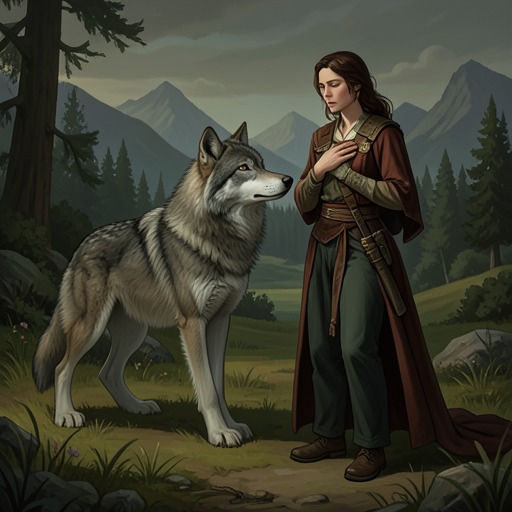
The doorstep incident is related to, but distinct from, Mate Marking. Cooper had urinated there just before telling Mo he could no longer see her. He explains that he was marking territory to keep other predators away and to protect her after she had encountered angry grizzly bears. That act was directed at the area around Mo’s home; the bite, by contrast, declares a bond between Cooper and Mo. The distinction gives marking a recurring protective function in Cooper’s behavior without making every form of marking equivalent to the lifelong bond.
The timing of the doorstep marking complicates its meaning. Cooper had been preparing to leave Mo, yet he still tried to guard her territory. Protection persists even when he withdraws from the relationship, revealing how difficult it is for him to separate his wolf instincts and concern for Mo from his decision to leave. When Mo learns what he did, she hits him again. The scene keeps the emotional disagreement in view: Cooper presents protection as an expression of care, but Mo is entitled to challenge the unilateral and unexplained ways he expresses it.
Lifelong Bond and Its Cost
When Cooper returns, the explanation becomes more consequential. After shifting back into human form, he apologizes for leaving and says that he should have apologized first. He acknowledges that biting Mo and marking her meant he could never mate with anyone else. Mo’s startled “What?” prompts him to explain the rule: “Once we mark our partners, that’s it. It’s more magic than science, but after we mark the one we choose, our DNA won’t mix with anyone else’s. Wolves mate for life.” In this account, the mark is not merely a signal that can be withdrawn when circumstances change. It commits Cooper biologically as well as emotionally, and it closes off the possibility of another mate.
Mo immediately recognizes what Cooper’s departure had risked: she asks whether he walked away knowing he might never have children or find someone else. His answer, “I wouldn’t want anyone else,” clarifies that his departure did not mean he had ceased to choose her. It does not erase the hurt caused by leaving, but it reframes the mark as a bond whose permanence Cooper accepted even while he failed to remain beside her. The scene makes the practice’s costs part of its significance: commitment is powerful precisely because, in Cooper’s account, it cannot be casually reversed.
Family, Belonging, and the Ending
The mark’s connection to reproduction belongs to a wider account of werewolf inheritance. Cooper explains that families who marry outside the pack have increasingly produced dead lines—branches unable to transform—and that the wolf ability is carried on in fewer families. He also describes the wolf as part of their inherited nature, not a skill chosen at will. Against this background, the rule that marked partners cannot mix their DNA with anyone else’s connects an individual bond to the continuation of werewolf families, even as intermarriage can diminish the number of people able to change.
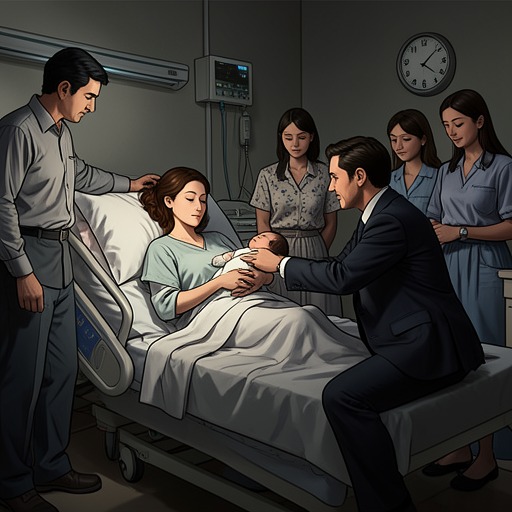
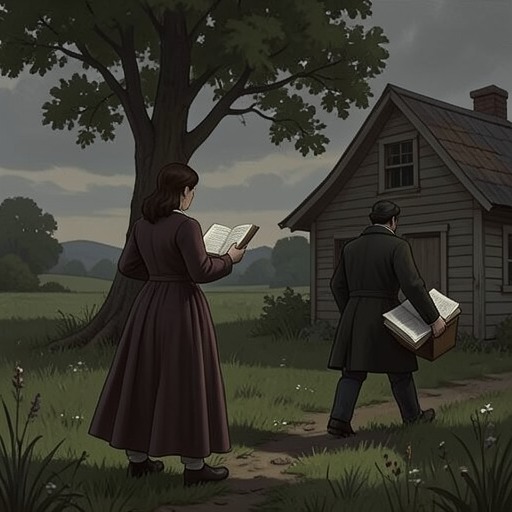
Mo’s pregnancy makes the subject of children immediate, although the story does not establish that Mate Marking caused it. She searches her books for information about human women carrying werewolf babies and finds that such pregnancies are described as averaging about six months. Later, Cooper asks her to marry him and raise their baby with him, his hand resting over her belly. The proposal gives their future a shared family form after the earlier separation, but it is distinct from the mark itself: the bite had already declared a bond that Cooper says was lifelong. Mate Marking therefore stands at the intersection of bodily protection, exclusive partnership, supernatural inheritance, and family life. Its scar is both a public sign of belonging and a reminder that the bond’s promises carry obligations that the mark alone cannot fulfill.